
Handheld Communication Device
Industrial Design
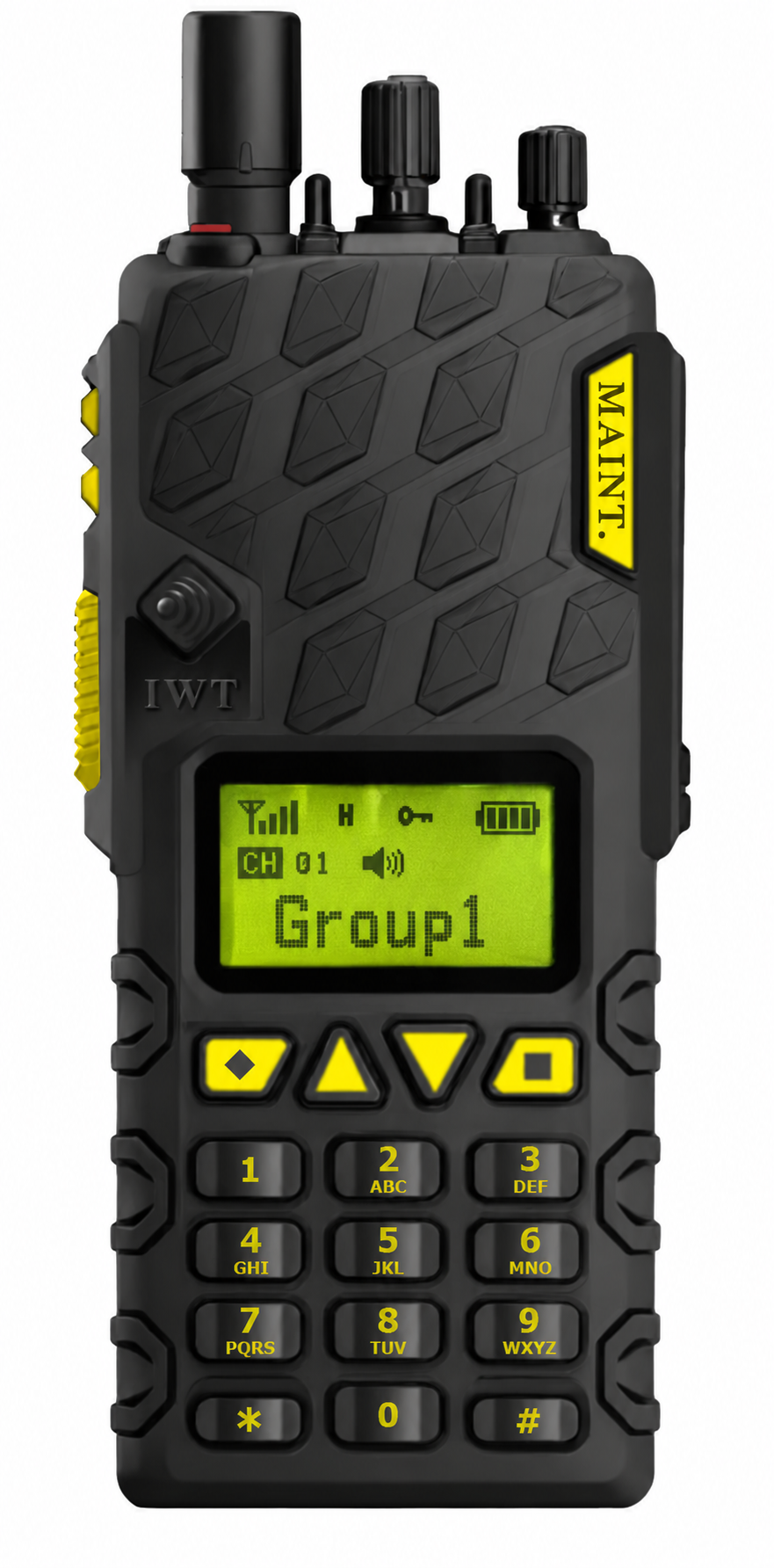
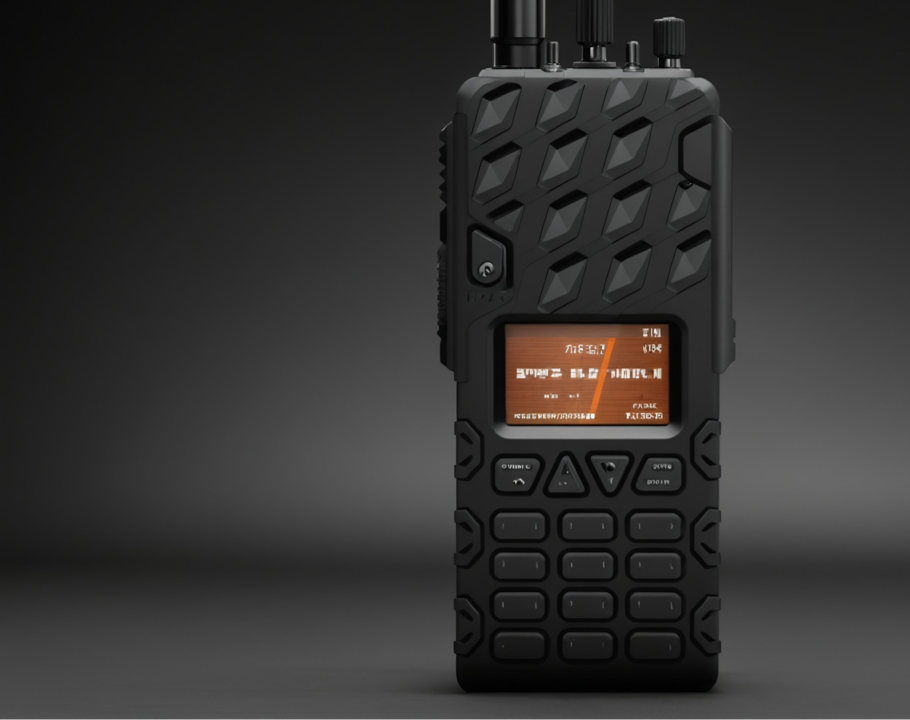
SPEED evaluated the existing handset alongside competing two-way radios, then explored several styling directions with IWT. The team selected a rugged visual language and blended the preferred ARMOR and ROCK concepts into the distinctive RockArmor design, with strong grip geometry and clear control groupings.
Mechanical Engineering
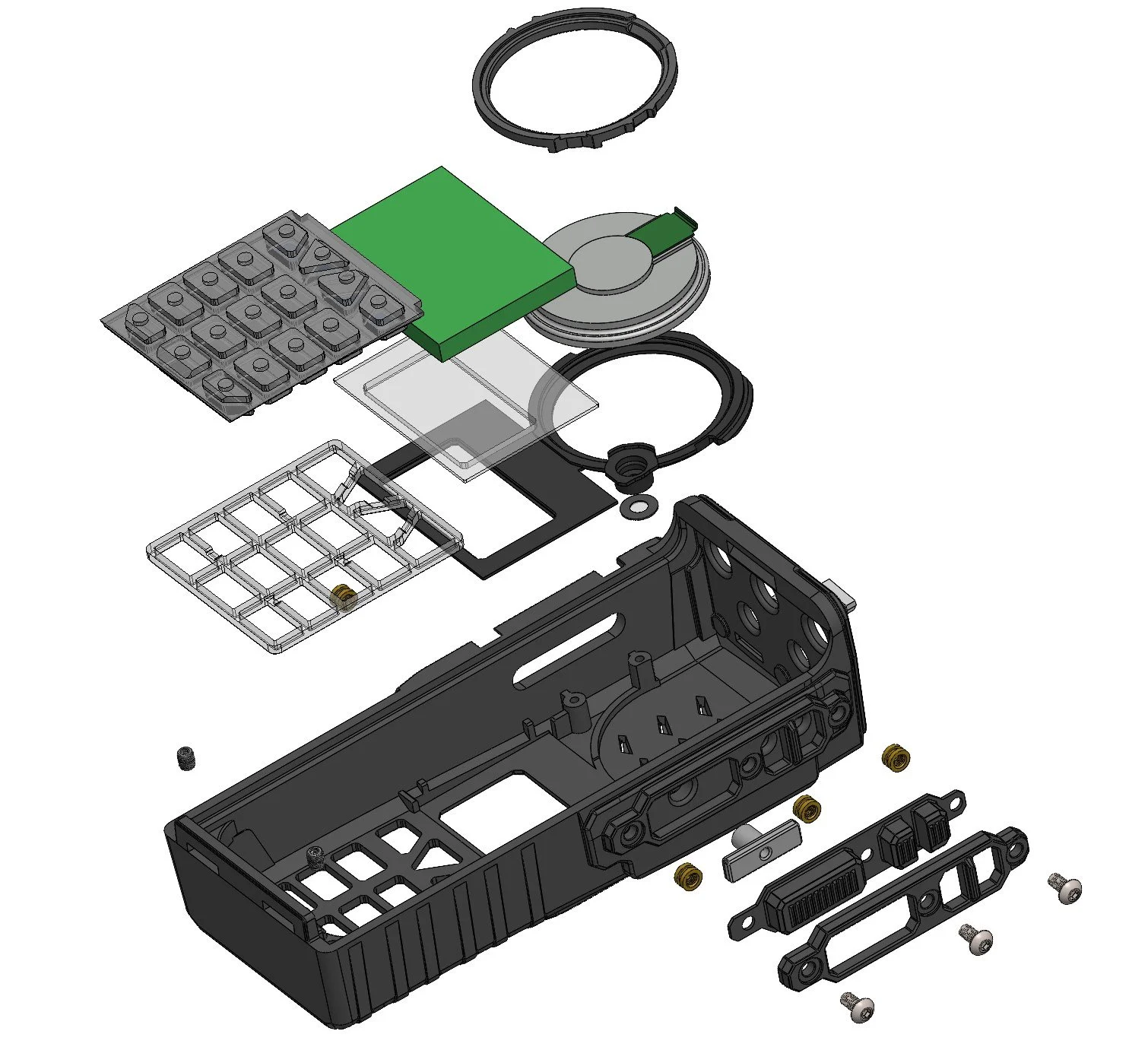
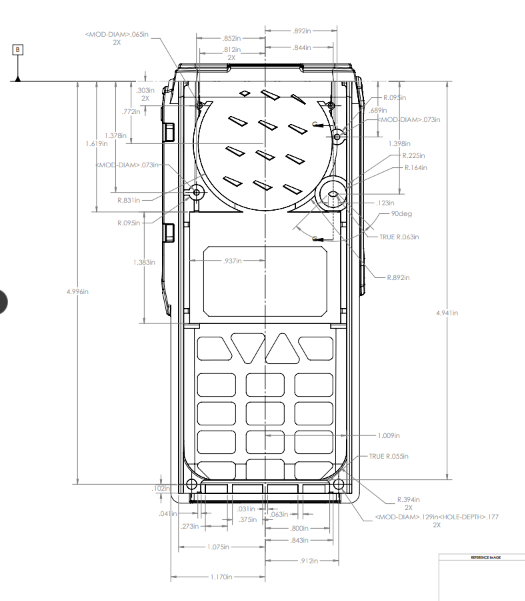
The selected design was developed into a detailed mechanical CAD assembly. Particular attention went to packaging existing components and resolving the top-mounted antenna and rotary controls, side buttons, display, keypad, and internal mounting features.
Industrial Wireless Technologies (IWT) partnered with SPEED to modernize its Sentinel handheld communications device. The objective was a distinctive, rugged enclosure that improved the product’s visual identity and ergonomics while accommodating its existing electronics and controls.
The Challenge:
Give Sentinel a recognizable design language suited to demanding industrial environments.
Improve grip, button accessibility, and the layout of critical handset controls.
Integrate the display, keypad, antenna, speaker, microphone, and rotary controls within a redesigned housing.
Turn the chosen aesthetic into detailed mechanical CAD and a physical prototype.
The Sentinel redesign brought together a rugged new product identity, detailed mechanical packaging, and a physical prototype. It demonstrates SPEED’s ability to connect industrial design with engineering execution for complex handheld electronics.
Prototyping
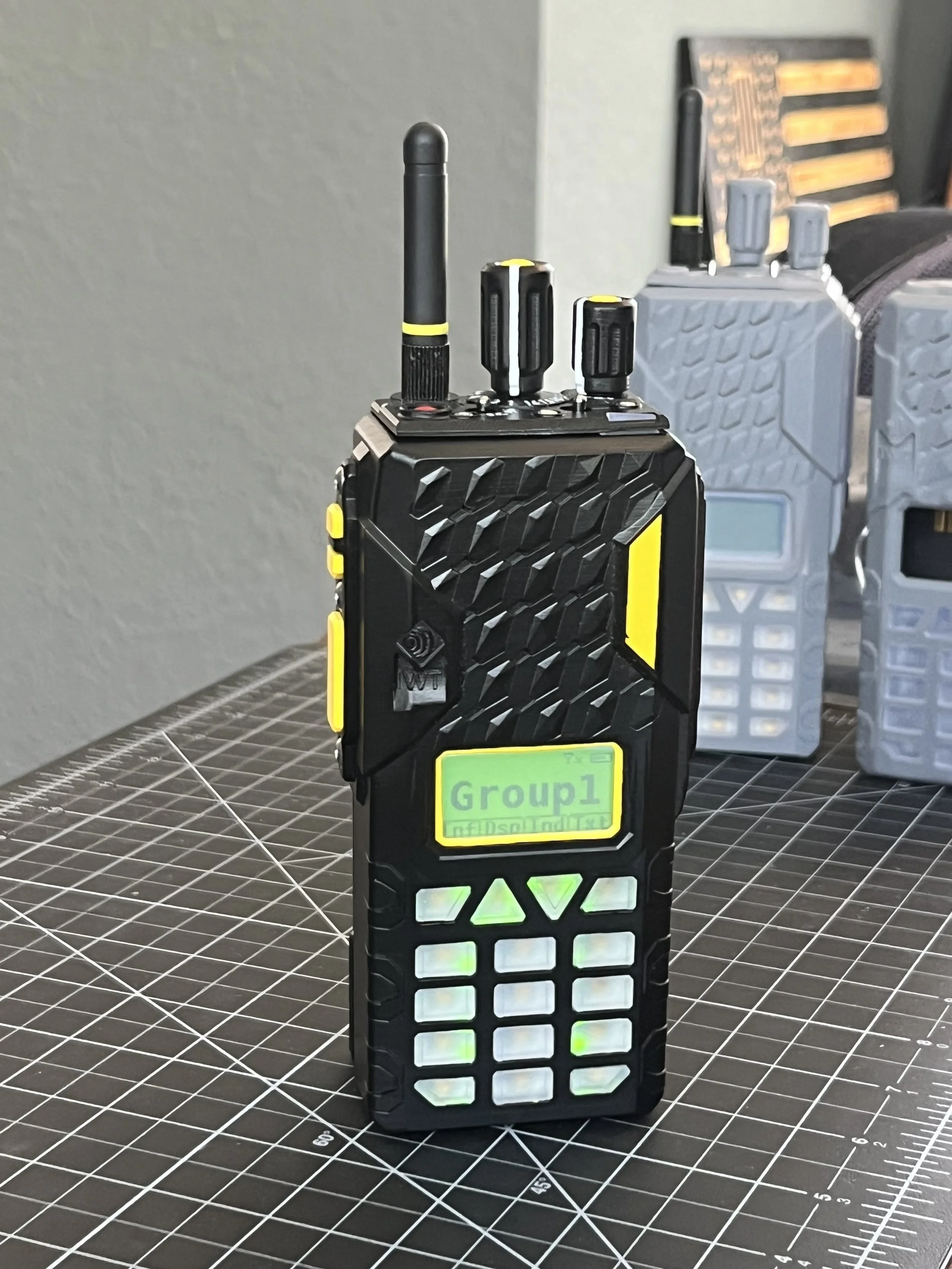
A physical handset prototype brought the new housing, textured grip, control features, and keypad layout together. It provided a tangible way to review proportions, handling, component fit, and opportunities for refinement before further manufacturing development.
Design for Manufacturing
As the enclosure took shape, SPEED considered part interfaces, component mounting, fastening, and assembly access. The resulting CAD documentation and prototype established a practical basis for further refinement toward manufacturing.